

Hey there, fellow hiking enthusiasts! I'm a supplier of hiking socks, and today I'm going to dive into a topic that might seem a bit counterintuitive: the disadvantages of wool hiking socks. Now, I know wool socks, especially merino wool ones, have a pretty solid reputation in the hiking community. They're often hyped up for their warmth, moisture-wicking abilities, and natural odor resistance. But like any product, they're not without their drawbacks.
Let's start with the price. Wool hiking socks, particularly those made from high - quality merino wool, can be pretty pricey. When you're looking at a pair of Merino Wool Hiking Outdoor Socks, you might notice that they cost significantly more than synthetic alternatives. This is because merino wool is a premium material, and the process of sourcing, processing, and manufacturing these socks adds to the cost. For budget - conscious hikers or those who need to replace their socks frequently due to wear and tear, the high price can be a major deterrent.
Another issue is the initial break - in period. Wool socks, especially thick ones designed for hiking, can feel stiff and scratchy when you first put them on. Your feet aren't used to the texture, and it can be uncomfortable, especially during long hikes. You might find yourself constantly adjusting your socks or feeling like your feet are being rubbed the wrong way. It can take a few wears for the wool to soften up and mold to the shape of your feet. This break - in period can be a real pain, especially if you're planning a big hiking trip and don't have the time to gradually get used to the socks.
Wool is also a bit more delicate compared to synthetic materials. When it comes to washing, you have to be extra careful. Wool socks can shrink if they're washed in hot water or put in a high - heat dryer. You need to follow specific washing instructions, which usually involve using a gentle detergent and cold water, and then air - drying them. This is a hassle, especially when you're on the go. You might not have access to the right kind of detergent or a suitable place to air - dry your socks. And if you make a mistake and wash them incorrectly, you could end up with a pair of socks that are too small to wear.
In terms of drying time, wool socks take longer to dry than synthetic ones. After a long day of hiking in wet conditions, you'll want your socks to dry quickly so you can wear them again the next day. But wool retains moisture, and it can take hours, if not days, for them to completely dry. This can be a problem if you're on a multi - day hiking trip and don't have enough pairs of socks. You might find yourself having to wear damp socks, which can lead to blisters and other foot problems.
Wool socks also have a limited lifespan compared to some synthetic alternatives. The fibers in wool can break down over time, especially with frequent use and washing. The thick cushioning in hiking socks can start to compress and lose its shape, reducing the comfort and support they provide. After a certain number of wears, you'll notice that the socks don't feel as soft or comfortable as they used to, and you'll need to replace them.
Now, let's talk about the weight. Wool is heavier than many synthetic materials. When you're packing for a long hike, every ounce counts. The extra weight of wool socks can add up, especially if you're carrying multiple pairs. This can be a disadvantage for hikers who are trying to minimize their pack weight to make their hikes more manageable. The added weight can also make your feet feel more tired, especially during long - distance hikes.

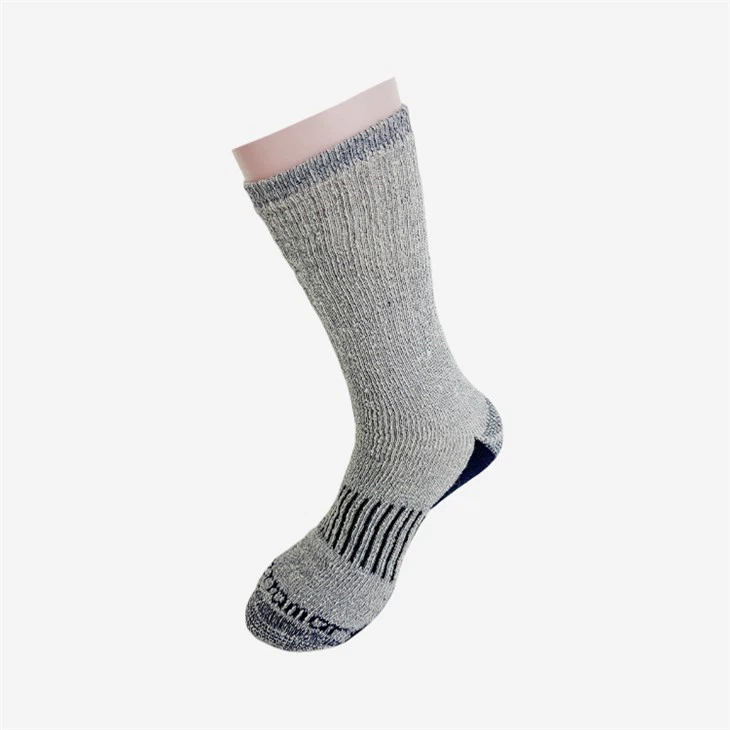
While wool is known for its moisture - wicking properties, it doesn't perform as well as some synthetic materials in extremely wet conditions. In heavy rain or when you're wading through streams, wool can become saturated and stay wet for a long time. When the wool is wet, it loses some of its insulating properties, and your feet can get cold. Synthetic socks, on the other hand, can often wick moisture away more efficiently and dry faster, keeping your feet warmer and drier in wet situations.
In some cases, wool can also cause allergic reactions. Although it's not very common, some people are allergic to wool fibers. They might experience itching, redness, or rashes on their feet when they wear wool socks. This is a serious issue for those affected, as it can make hiking extremely uncomfortable or even impossible.
Despite these disadvantages, wool hiking socks still have their place in the market. They offer excellent warmth, natural odor resistance, and a certain level of comfort once they're broken in. At our store, we also offer Running Hiking Athletic Cushion Socks and Men's Women's Hiking Walking Socks that come in different materials, including wool and synthetic blends, so you can choose the ones that best suit your needs.
If you're interested in learning more about our hiking socks or have any questions regarding the products, feel free to reach out to us. We're here to help you find the perfect socks for your next hiking adventure. Whether you're willing to overlook the disadvantages of wool socks or prefer to go for a synthetic alternative, we've got a wide range of options for you. Contact us to start a procurement discussion and find the right socks for your hiking needs.
References
- Personal experience as a hiking sock supplier
- Customer feedback and reviews on wool hiking socks
- Industry knowledge on the properties of wool and synthetic materials