

In the realm of cozy footwear, plush slipper socks have emerged as a popular choice for their delightful combination of warmth, comfort, and style. As a long - standing supplier of plush slipper socks, I am often asked by customers, buyers, and those simply interested in the product about one crucial feature: do plush slipper socks have a moisture - wicking fabric? In this article, I'll delve into this topic in detail, exploring the science behind moisture - wicking, the materials used in plush slipper socks, and how our products measure up in this aspect.
Understanding Moisture - Wicking
Before we can determine whether plush slipper socks have moisture - wicking capabilities, it's important to understand what moisture - wicking actually is. Moisture - wicking refers to the ability of a fabric to draw sweat away from the skin and disperse it across the fabric's surface, where it can evaporate more easily. This process helps to keep the feet dry and comfortable, reducing the risk of blisters, odor, and fungal infections.
Moisture - wicking fabrics typically have a special structure that allows them to move moisture through capillary action. Capillary action is the ability of a liquid to flow in narrow spaces without the assistance of, or even in opposition to, external forces like gravity. In the context of fabrics, this means that the tiny channels within the fibers of the material pull sweat away from the skin and spread it out, increasing the surface area for evaporation.
Materials Used in Plush Slipper Socks
Plush slipper socks are made from a variety of materials, each with its own unique properties. Some common materials include:
- Cotton: Cotton is a natural fiber that is soft, breathable, and absorbent. However, it is not a particularly good moisture - wicking material. While it can absorb sweat, it tends to hold onto it rather than disperse it quickly. This means that cotton socks can become damp and uncomfortable over time, especially if the wearer is very active or has sweaty feet.
- Polyester: Polyester is a synthetic fiber that is known for its moisture - wicking properties. It is hydrophobic, which means it repels water and does not absorb it easily. Instead, it allows sweat to move across the surface of the fabric, promoting evaporation. Polyester is also durable, wrinkle - resistant, and quick - drying, making it a popular choice for athletic wear and other applications where moisture management is important.
- Acrylic: Acrylic is another synthetic fiber that is often used in plush slipper socks. It is soft, warm, and lightweight, and it can mimic the look and feel of natural fibers like wool. Acrylic has some moisture - wicking capabilities, but it is not as effective as polyester. It can absorb a small amount of moisture, but it may not dry as quickly as other materials.
- Wool: Wool is a natural fiber that has excellent moisture - wicking properties. It can absorb up to 30% of its weight in water without feeling wet, and it can release moisture through evaporation. Wool is also naturally antibacterial and odor - resistant, making it a great choice for socks. However, some people may find wool to be itchy or uncomfortable, especially if they have sensitive skin.
Moisture - Wicking in Our Plush Slipper Socks
As a supplier, we understand the importance of moisture - wicking in plush slipper socks. That's why we offer a range of products that are designed to keep feet dry and comfortable. Our sock designs often incorporate a blend of materials to achieve the best balance of comfort, warmth, and moisture management.
For example, some of our Warm Slipper Socks feature a combination of polyester and cotton. The polyester provides the moisture - wicking properties, while the cotton adds softness and breathability. This blend allows the socks to draw sweat away from the skin and keep the feet dry, while still providing a comfortable and cozy feel.
Our Thick Warm Cozy slipper socks are another great option. These socks are made with a blend of acrylic and wool. The acrylic helps to provide warmth and softness, while the wool's natural moisture - wicking and antibacterial properties ensure that the feet stay dry and fresh.
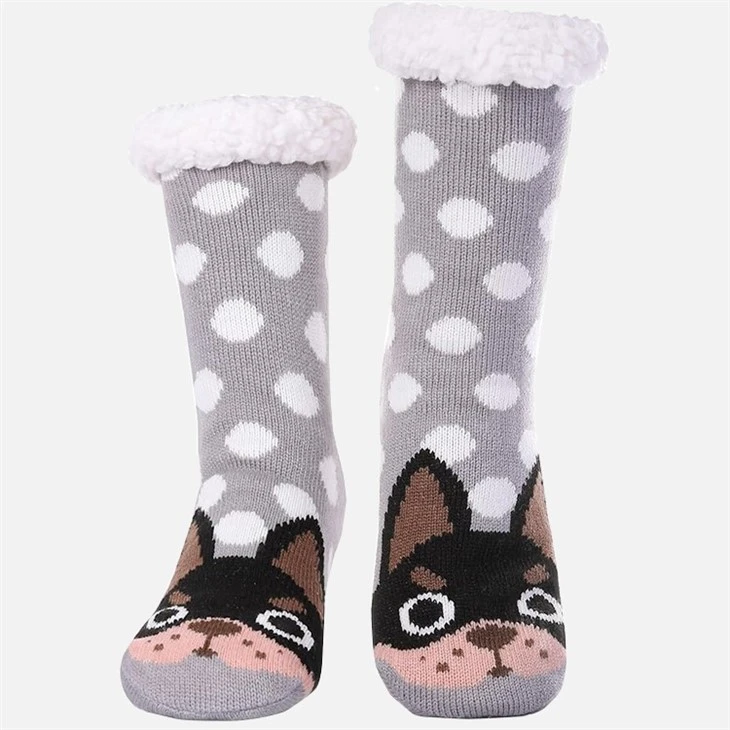

In addition, our Double Layered Sherpa Lined Socks are designed for maximum comfort and warmth. The double - layered construction helps to trap heat, while the inner sherpa lining is made from a moisture - wicking material. This combination allows the socks to keep the feet warm while also managing moisture effectively.
The Benefits of Moisture - Wicking Plush Slipper Socks
There are several benefits to choosing plush slipper socks with moisture - wicking fabric:
- Comfort: Moisture - wicking socks help to keep the feet dry, which can prevent that uncomfortable, clammy feeling. Dry feet are also less prone to blisters and irritation, making the socks more comfortable to wear for extended periods.
- Odor Control: When sweat accumulates in socks, it can create a breeding ground for bacteria, which can lead to unpleasant odors. Moisture - wicking fabrics help to keep feet dry, reducing the growth of bacteria and minimizing odor.
- Health: Keeping feet dry can help to prevent fungal infections such as athlete's foot. Fungi thrive in warm, moist environments, so by managing moisture, moisture - wicking socks can help to keep feet healthy.
Contact Us for Procurement
If you're interested in sourcing high - quality plush slipper socks with excellent moisture - wicking capabilities, we'd love to hear from you. We offer a wide range of products with different styles, materials, and colors to meet your specific needs. Our team of experts is dedicated to providing the best customer service and ensuring that you get the products you want. Whether you're a retailer looking to stock your shelves or an individual interested in bulk purchasing, we're here to assist you. Reach out to us to start a procurement discussion and find the perfect plush slipper socks for your requirements.
References
- Textile Institute. (2023). Handbook of Technical Textiles. Woodhead Publishing.
- Horrocks, A. R., & Anand, S. C. (Eds.). (2016). Handbook of Fibre Chemistry. CRC Press.
- Tortora, P. G., & Merkel, J. B. (2016). Fairchild's Dictionary of Textiles. Fairchild Books.